
Excerpt
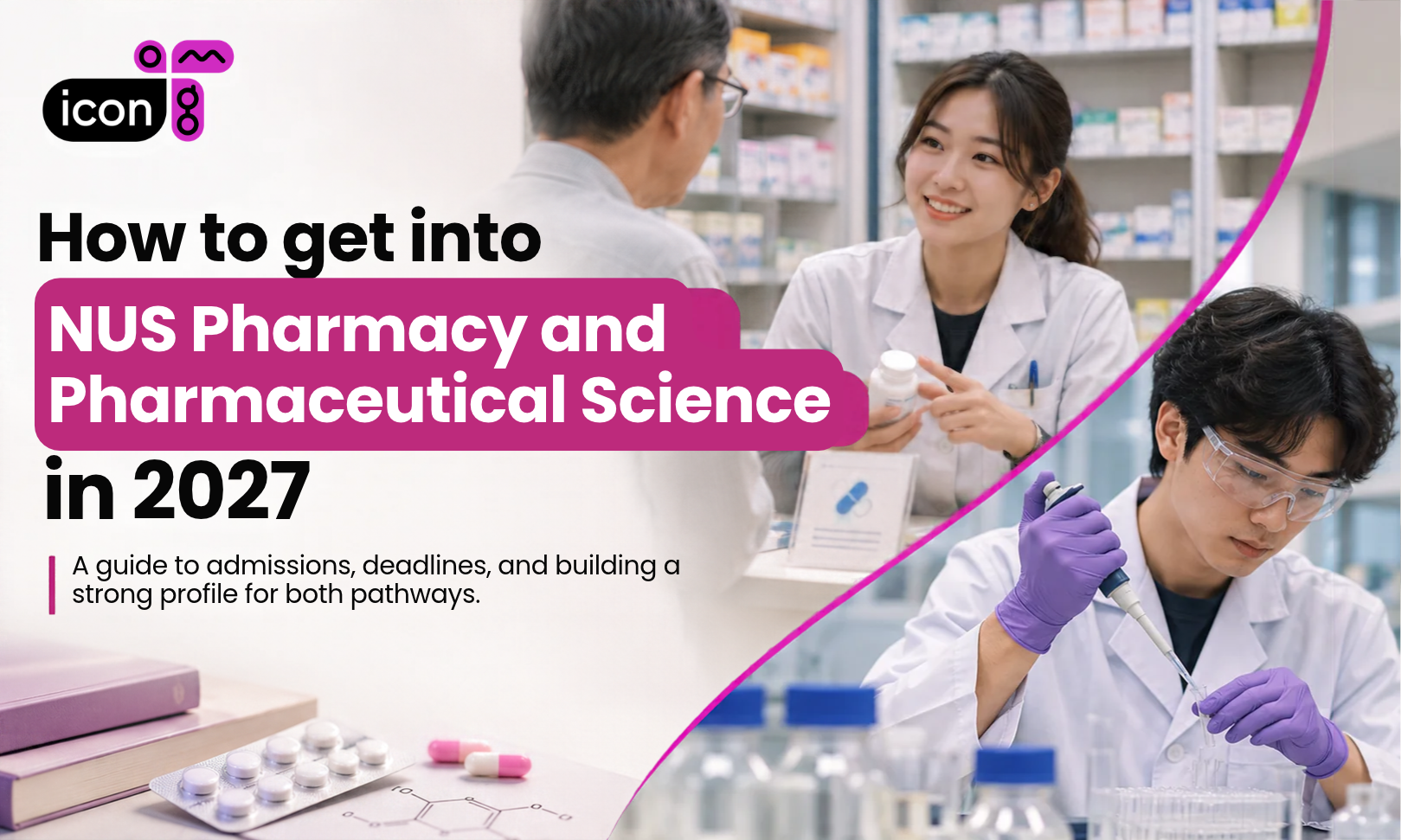
For students interested in medicine and drug discovery, NUS provides two distinct four-year honours degree programmes: the Bachelor of Pharmacy (Honours) and the Bachelor of Science in Pharmaceutical Science (Honours). While both degrees are built upon a shared rigorous scientific foundation, they lead to different professional paths. Pharmacy centers on patient-facing healthcare and the safe, optimal application of therapeutic drugs, whereas Pharmaceutical Science emphasises the discovery, development, formulation, and quality evaluation of pharmaceutical products.
This guide outlines the academic prerequisites, key application deadlines, admissions procedures, and strategic recommendations needed for building a strong candidate profile for the AY2027/28 admission cycle.
What do both programmes look for in 2027?
Bachelor of Pharmacy (Honours)
Designed for students passionate about patient care and therapeutic medicines, this programme builds core competency in clinical decision-making, pharmacology, medication safety, and patient counselling. Through practical workplace learning across pharmaceutical industry and healthcare settings, graduates can pursue registration as a licensed pharmacist upon meeting standard degree and training requirements. Approximately 175-200 students are admitted each academic year.
Bachelor of Science in Pharmaceutical Science (Honours)
This programme is tailored for students focused on research and drug discovery, covering topics spanning across medicinal chemistry, formulation science, pharmacokinetics, pharmaceutical analysis, biotechnology, and regulatory science. Through hands-on research and a range of industry projects, students are able to gain technical and scientific competencies essential for careers in the biomedical, pharmaceutical, and consumer healthcare sectors. Roughly 70 students are admitted each academic year.
-
Academic prerequisites
Both programmes require a strong academic foundation. The minimum subject prerequisites are as follows:
|
Qualification |
Subject prerequisites |
|
Singapore-Cambridge GCE A Levels |
A good H2 pass in Chemistry and H2 pass in Biology, Physics or Mathematics |
|
International Baccalaureate (IB) |
A good Higher Level (HL) pass in Chemistry and HL pass in Biology, Physics or Mathematics |
|
International qualifications |
A good Year 12 level pass in Chemistry and pass in Biology, Physics or Mathematics |
|
NUS High School Diploma |
A good major CAP in Chemistry and in Biology, Physics or Mathematics |
|
Singapore polytechnic diploma |
An accredited diploma, ideally in a health science-related discipline |
Key dates and timeline for the 2027 admissions cycle
Note: Please verify exact deadlines with NUS, particularly if applying with international qualifications.
|
Event |
Tentative timeline |
|
Application portal opens |
|
|
Application deadlines |
|
|
Admission outcome |
Most local applicants can expect an outcome by late March 2027, while international applicants can expect an outcome by late July 2027 |
Tips to strengthen your application
NUS approaches undergraduate admissions holistically. Beyond achieving strong grades, applicants have to demonstrate a genuine interest in their chosen field and understand their motivation.
For pharmacy applicants
Pharmacists play a key role far beyond dispensing medications. They guide patients on proper drug usage, evaluate potential interactions, address side effects, and collaborate closely with care teams to ensure safe, effective treatments.
Gaining firsthand experience, such as through shadowing practitioners, volunteering in health settings, or joining community initiatives, helps demonstrate the strong communication and ethical judgement needed in pharmacy. It also offers insight into how professionals balance patient well-being and evidence-based practice. Additionally, staying informed on major industry issues like antimicrobial resistance, and new therapy safety can deepen your understanding and strengthen your motivation for entering the field.
You can also read about current healthcare challenges, such as antimicrobial resistance and the safe use of new medicines. These topics can help you develop a more informed understanding of the profession and why you want to pursue it.
For pharmaceutical science applicants
To strengthen your profile, actively engage in practical initiatives such as biology or chemistry research projects, laboratory workshops, science competitions, or industry outreach initiatives. You may also examine clinical trial data, analyse drug-development case studies, or evaluate how different formulations impact delivery mechanisms.
Critically reflect on the scientific and regulatory hurdles inherent to drug development, which include safety standards, quality control, regulatory compliance, and translational challenges.
Activities that benefit either application
- Science competitions and projects: Develop problem-solving skills and demonstrate curiosity about chemistry, biology and medicine.
- Volunteering and community service: Learn about public health, communication and the needs of different communities.
- Independent research: Investigate a medicine, disease or pharmaceutical innovation and evaluate reliable scientific sources.
- Leadership and teamwork: Take responsibility for a project, coordinate a team or organise an educational activity.
- Relevant work experience: Explore appropriate healthcare, laboratory or pharmaceutical industry opportunities, where available.
You do not need to participate in every activity listed. Choose experiences that genuinely interest you and engage meaningfully with them. NUS requires applicants to report up to four achievements or activities, so depth and thoughtful reflection can be more useful than an extensive list of unrelated experiences.
Conclusion & next steps
Both Pharmacy and Pharmaceutical Science offer opportunities to contribute to the future of medicine, but they suit different interests. Pharmacy is the more direct route for students who want to work with patients and healthcare teams to ensure medicines are used safely and effectively. Pharmaceutical Science is better suited to students who are drawn to the scientific investigation, development and manufacture of medicines.
Start by understanding the academic requirements, researching the two curricula and pursuing activities that allow you to explore your preferred field. Strong academic performance remains essential, while meaningful experiences and a clear understanding of your chosen programme can help you present a more informed application.
Thorough, structured preparation is essential to enhancing your application to a place in the 2027 cohort. Our experienced consulting team offers personalised guidance at every stage of the admissions process, helping you develop a clear and effective application strategy. Contact an Icon Education advisor today to schedule a consultation and take the first step towards your NUS application.