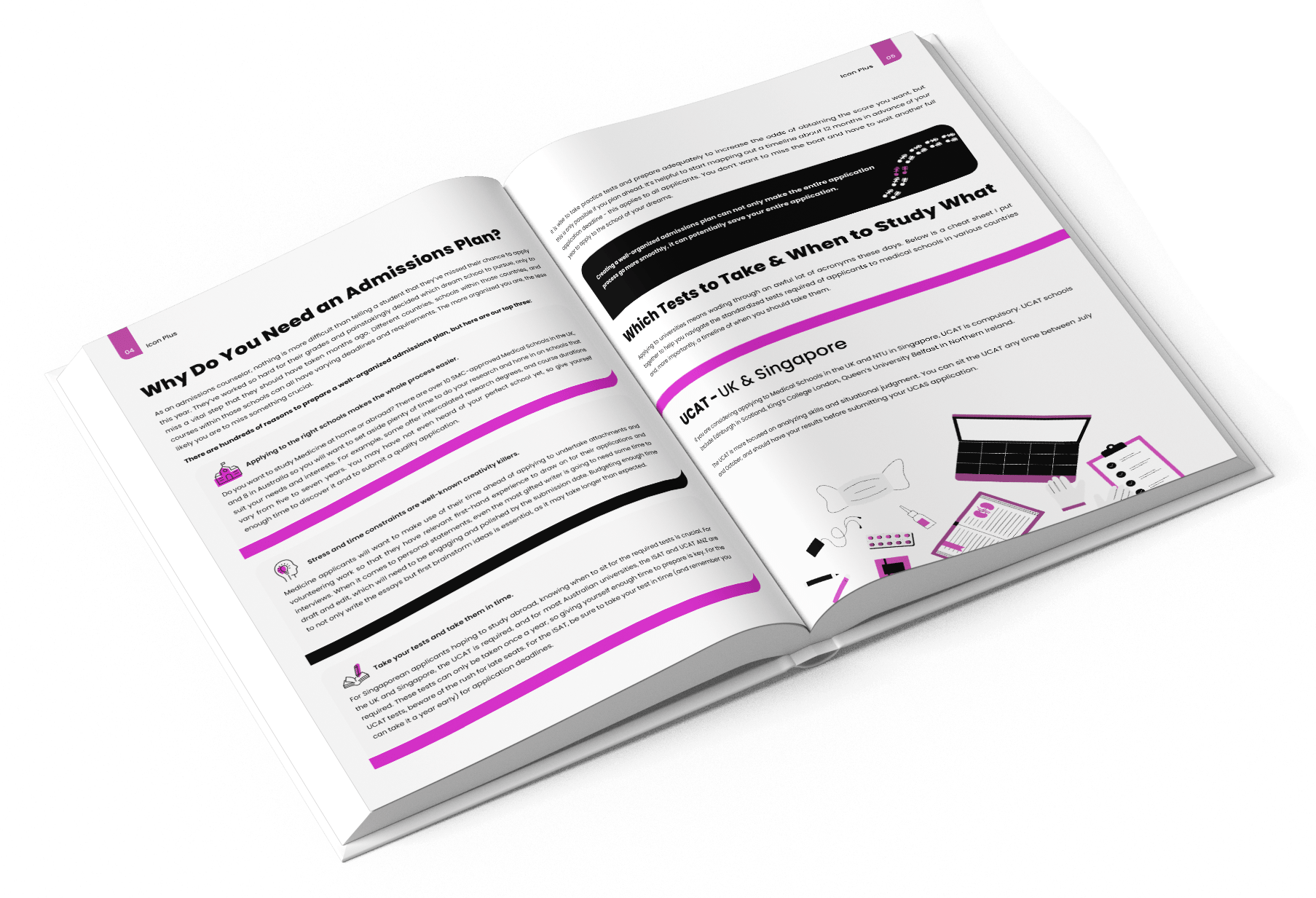
Download our Ultimate Guide to Medical School Admissions
This guide unlocks the secrets to a successful application.
Congratulations on your IB results! Now, it's time to take the next step toward your dream of becoming a doctor.
This downloadable guide, specifically designed for IB students like you, gives you everything you need to navigate the competitive world of medical school admissions in Singapore.
Chapters Included
Inside You'll Find:
IB-friendly Strategies::
Explore top Singaporean, UK, and Australian medical programs perfect for IB graduates.
IB-friendly Strategies:
Learn how to translate your strong IB scores and skills into a compelling application.
Acing the Application:
Master the process with expert tips and proven strategies.
Why Choose Our Guide?
Actionable Strategies:
Our proven tips and guided prompts will make the application process smooth and efficient.
Expert Insights:
Gain invaluable knowledge from admissions specialists who have helped thousands of students get into top US universities.
Frequently Asked Questions:
Do medical schools prefer IB or A-Levels?
Medical schools typically don't have a preference between IB and A-Levels. They focus on strong academic performance in relevant subjects like Biology, Chemistry, and Physics (usually at Higher Level).
What are the typical entry requirements for medicine?
Requirements vary by country and school, but generally include:
Strong overall IB score (often 38+ points for UK schools)
High scores in science subjects (Biology, Chemistry, Physics) at Higher Level (HL)
Other relevant subjects like Mathematics or Psychology (may be helpful)
Entrance exams (e.g. UCAT) for some schools
How can I translate my IB skills to medicine?
The IB's focus on critical thinking, research, and communication is valuable for medical school. Highlight these skills in your application essays and interviews.
How big is your marketing team?
Choose Activities Strategically: Select activities that demonstrate skills relevant to medicine like leadership in a health-related club, volunteering with patient populations, or participating in medical research projects. Personal Statement: Connect specific CAS experiences to your passion for medicine and how they helped develop skills crucial for a future doctor.
5. How does TOK help with medicine?
TOK hones critical thinking, ethical reasoning, and communication skills – all essential for analysing medical cases, navigating ethical dilemmas, and providing clear patient communication.
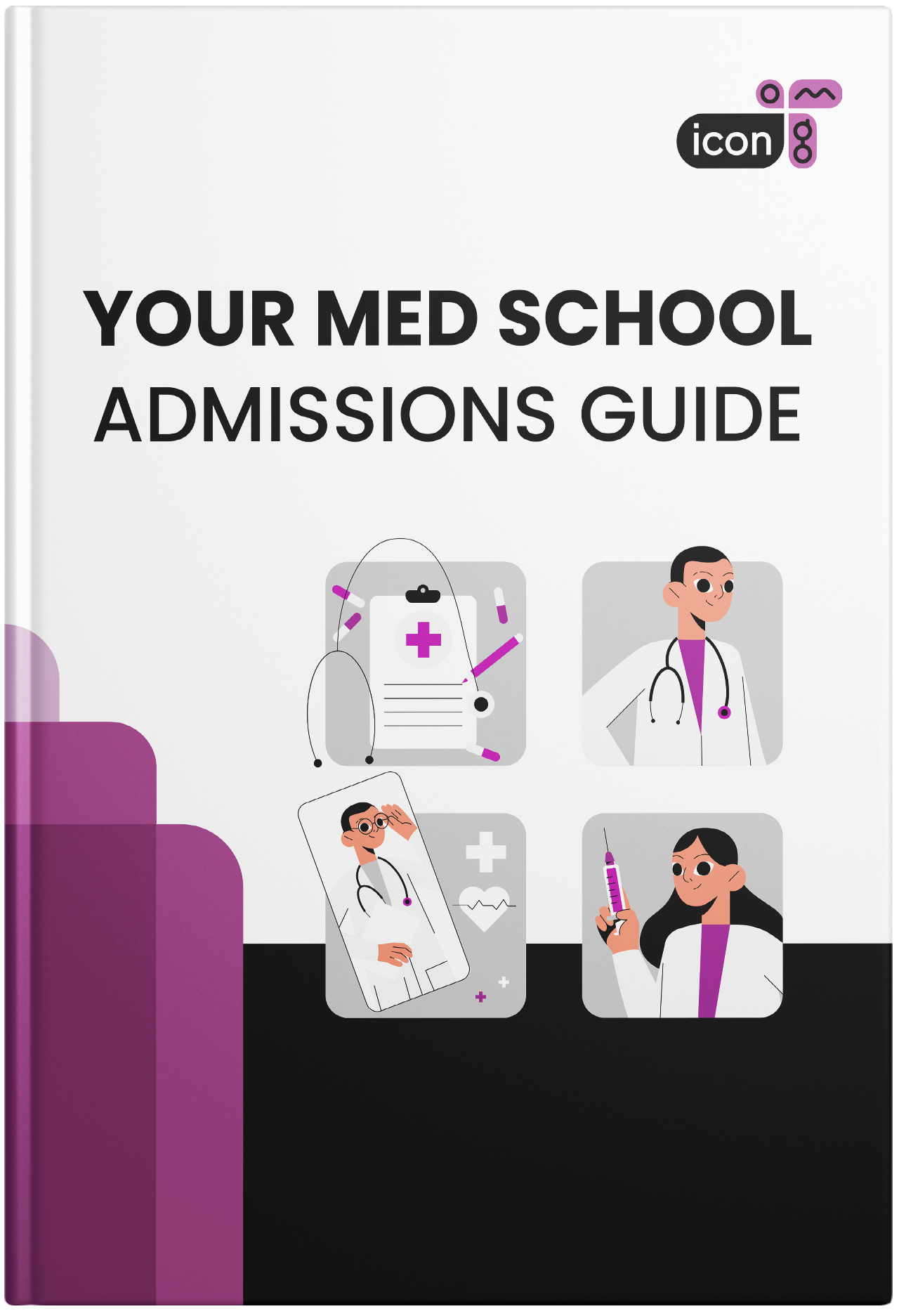
Download our Medical School Guide.
While there are many medical school requirements to fulfill and it can feel daunting, we are confident that our guide will be a valuable starting resource as you navigate your various academic, extracurricular, and application responsibilities.

-1.svg)